

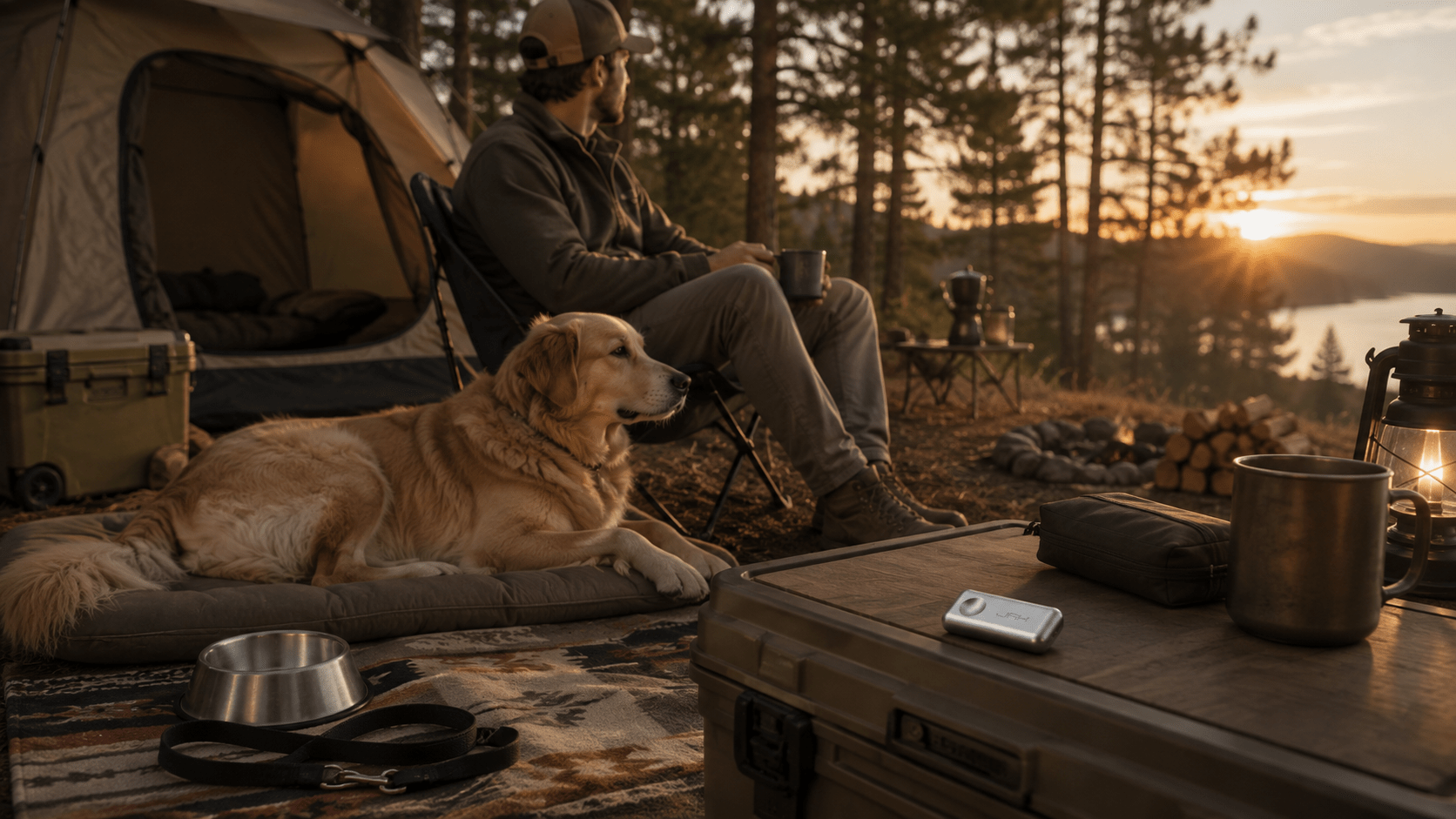
A better outdoor routine with your dog does not have to mean longer hikes, expensive equipment, or turning every weekend into an expedition.
Most dogs benefit more from consistency than intensity.
A familiar walk with enough time to sniff. A few minutes of training. A quiet break in the shade. An occasional trail, lake day, or camping trip that adds variety without exhausting either of you.
The best routine is one you can repeat. It should support your dog’s physical health, curiosity, confidence, and connection with you—without turning every outing into a complicated production.
Start With Your Dog, Not the Activity
It is easy to plan around what sounds enjoyable to you. Your dog may have a different idea.
Before choosing an outdoor activity, consider:
- age and fitness level;
- breed and body type;
- tolerance for heat and cold;
- confidence around people, dogs, traffic, and wildlife;
- health conditions or mobility limitations;
- recovery after previous outings.
A young, athletic dog may enjoy a longer trail. A senior dog might prefer a short walk with plenty of time to investigate scents. A reactive dog may be happier on a quiet route than in a crowded dog park.
A successful outing should leave your dog pleasantly tired—not physically depleted or emotionally overwhelmed.
Build the Routine Around Three Types of Outings
Doing the same long walk every day is not the only way to keep a dog active.
A balanced outdoor routine can combine three kinds of experiences.
The everyday walk
This is the foundation.
It can be short, but it should give your dog enough time to:
- move comfortably;
- go to the bathroom;
- investigate smells;
- practice leash skills;
- observe the environment without being rushed.
Sniffing is not wasted time. It gives your dog information and turns a familiar route into a mentally engaging activity.
The enrichment outing
This is less about distance and more about novelty.
Try:
- a different neighborhood;
- a quiet park;
- a dog-friendly shopping area;
- a field with unfamiliar smells;
- a new walking surface or route.
A 30-minute enrichment walk can sometimes be more satisfying than a longer, repetitive outing.
The longer adventure
Longer activities can include:
- dog-friendly hiking trails;
- camping weekends;
- beach or lake visits;
- fishing trips;
- community dog walks;
- outdoor cafés;
- road trips with planned walking stops.
These outings create variety, but they should complement—not replace—a sustainable weekly routine.
For trip-planning ideas, the guide to building a comfortable campsite without overpacking can help you create a simpler base for both you and your dog.
Let Your Dog Sniff Without Losing Structure
There is a difference between allowing exploration and letting the walk become chaotic.
Try dividing the outing into two modes:
- Walking mode: moving together with a loose leash;
- Exploration mode: slowing down and allowing more sniffing.
A phrase such as “go sniff” can signal when your dog has more freedom to investigate.
This creates a relaxed walk without giving up control near roads, cyclists, wildlife, or other dogs.
Practice Skills That Make Outdoor Time Easier
The most useful outdoor skills are not impressive tricks. They are behaviors that reduce stress and risk.
Loose-leash walking
Your dog does not need to maintain a perfect heel. The goal is simply to move without constant pulling, sudden lunges, or tangled equipment.
Recall
Even in areas where dogs must remain leashed, recall provides an extra layer of safety if equipment slips or fails.
Leave it
Trails and parks may contain discarded food, animal waste, plants, bait, or other objects your dog should not pick up.
A practiced “leave it” cue can prevent a minor problem from becoming an emergency.
Calm waiting
Teach your dog to pause while you:
- adjust a harness;
- check a map;
- fill a water bowl;
- allow other visitors to pass;
- organize your equipment.
These skills make outdoor time feel cooperative rather than improvised.
Choose Dog-Friendly Places Before You Leave

A destination being outdoors does not automatically mean dogs are allowed everywhere.
Rules may differ between:
- national parks;
- state parks;
- beaches;
- campgrounds;
- nature reserves;
- public trails.
Some locations allow dogs only in developed areas or on designated paths. Others require short leashes or restrict access during certain seasons.
Check official rules before leaving. This prevents wasted trips and protects local wildlife.
For broader park-trip organization, see the guide to outdoor travel through popular US national parks. The article is written for adult travelers, but its advice on compact carry, changing conditions, and low-mess organization also applies to dog-friendly road trips.
Keep Your Outdoor Kit Simple
You do not need a second backpack full of pet equipment for an ordinary outing.
A practical dog outdoor kit can include:
- sturdy leash;
- properly fitted collar or harness;
- identification tag;
- water;
- collapsible bowl;
- waste bags;
- a few treats;
- towel or cloth;
- basic first-aid supplies.
For longer trails, you may also need:
- paw protection;
- an insulating or rain layer;
- extra water;
- tick-removal tool;
- portable mat;
- dog pack suited to the animal’s size and conditioning.
The goal is not maximum preparation. Carry the few items that solve predictable problems.
Build Water and Rest Into the Route
Do not wait until your dog appears exhausted before stopping.
Offer water during longer outings and plan brief rest periods in places with:
- shade;
- cool ground;
- space away from crowds;
- enough time for breathing to settle.
During warm weather, walk earlier or later in the day and reduce intensity. Pavement, exposed trails, and humid conditions can become demanding faster than expected.
The distance you planned matters less than how your dog is responding.
Watch Your Dog, Not Your Step Count
Mileage is a poor measure of whether an outing was successful.
Watch for changes such as:
- slowing down;
- repeated stopping;
- seeking shade;
- unusually heavy panting;
- lifting or licking paws;
- reluctance to continue;
- irritability or loss of focus.
Turn back before your dog reaches exhaustion.
A shorter outing that ends positively helps build confidence and endurance. Pushing too far may make the next trip more difficult.
Respect Wildlife and Other Trail Users
Your dog may be friendly. Wildlife does not know that.
Do not allow your dog to chase, approach, or bark continuously at wild animals. Keep enough distance to protect both the animal and the environment.
Good outdoor etiquette also means:
- shortening the leash when passing others;
- stepping aside on narrow trails;
- asking before allowing greetings;
- picking up waste every time;
- keeping your dog away from food and personal equipment belonging to others;
- leaving crowded areas when your dog becomes stressed.
A responsible routine makes nature easier for everyone to share.
Add Community Without Forcing Interaction
Outdoor routines can become a natural way to meet people who share similar interests.
You might explore:
- small dog-walking groups;
- breed-specific clubs;
- structured training walks;
- volunteer trail-cleanup events;
- dog-friendly neighborhood meetups;
- community hikes.
Choose groups that respect personal space. Not every dog enjoys direct interaction, and socializing does not have to mean playing with every animal nearby.
Sometimes the best social outing is simply walking near other dogs while remaining calm.
Create a Calm Break Routine for Both of You

Outdoor time does not have to be continuous movement.
A good break might look like this:
- Find stable ground away from traffic and wildlife.
- Offer your dog water.
- Give them time to settle.
- Check paws, leash, and body language.
- Organize your own personal items before continuing.
For adult users who legally carry smoking accessories, compact and durable gear can reduce clutter during longer outdoor outings. JAH Pipes, for example, fits the same general principle as other trail-ready equipment: one small metal item designed for repeated carry rather than a fragile glass piece that needs extra protection.
Its anodized aluminum construction and collapsible format may suit a personal pouch used for camping, hiking, or fishing trips. Readers interested in that specific use case can also see the guide to choosing a durable smoking pipe for hiking and camping.
The dog must always remain the priority:
- keep smoke away from your pet;
- never leave materials or residue within reach;
- keep lighters and accessories inside a closed pouch;
- wash or wipe your hands before handling treats, toys, or the leash;
- follow local laws, park policies, and fire restrictions.
A personal routine should never expose the animal or interrupt attentive handling.
Try Different Outdoor Activities With Your Dog
Variety keeps the routine interesting without requiring every activity to be intense.
Hiking
Choose a trail appropriate for your dog’s conditioning and gradually increase distance.
The article on outdoor smoking pipes for beach and lake conditions also includes broader observations about wind, sand, moisture, and containing personal equipment—conditions worth considering on dog-friendly coastal outings.
Camping
Introduce your dog to the tent and sleeping area before the first overnight trip. Bring familiar bedding and maintain the usual feeding routine when possible.
Beach or lake days
Check whether dogs are allowed, bring fresh drinking water, and prevent your dog from swallowing large quantities of saltwater or lake water.
Fishing trips
Create a safe resting place away from hooks, bait, lines, and sharp equipment. The guide to smoking pipes for fishing trips and outdoor carry offers additional organization ideas for adults carrying personal gear near the water.
Community walks
These can provide gentle social exposure without the intensity of an off-leash park.
Slow nature walks
Not every outdoor day needs a destination. Let your dog investigate at a comfortable pace while you notice the surroundings together.
Use a Repeatable Weekly Rhythm
You do not need to schedule every minute. A basic rhythm is enough.
Monday: familiar neighborhood walk with leash practice
Tuesday: shorter sniff-focused route
Wednesday: park visit or new neighborhood
Thursday: easy recovery walk
Friday: recall and “leave it” practice
Weekend: trail, beach, community walk, fishing day, or camping trip
Adjust this schedule to your dog’s energy, health, age, and recovery.
Rest days still include bathroom breaks and gentle movement. They simply remove intensity.
Keep a Small Record of What Works
You do not need a complex tracker.
After a new outing, note:
- duration;
- temperature;
- terrain;
- water consumed;
- your dog’s behavior;
- recovery time;
- anything that caused stress.
Patterns become easier to see.
Your dog may enjoy hills but struggle in heat. They may love forest trails but dislike crowded parks. Social outings may require more recovery than physical exercise.
Those observations are more useful than a generic activity target.
A Better Outdoor Routine Is One You Can Repeat
The best outdoor routine with your dog is not the most ambitious one.
It is the one that makes both of you want to go outside again.
Keep the kit light. Choose appropriate routes. Make room for sniffing. Practice useful skills. Carry water. Respect wildlife and other visitors. End the outing before your dog becomes exhausted.
A meaningful adventure can be a mountain trail, a campsite, or a slow walk through a neighborhood neither of you has explored.
Consistency builds the routine.
Curiosity makes it worth repeating.
Share:
How to Build a Comfortable Campsite
What Makes a Smoking Pipe Comfortable for Long, Uninterrupted Evenings?