

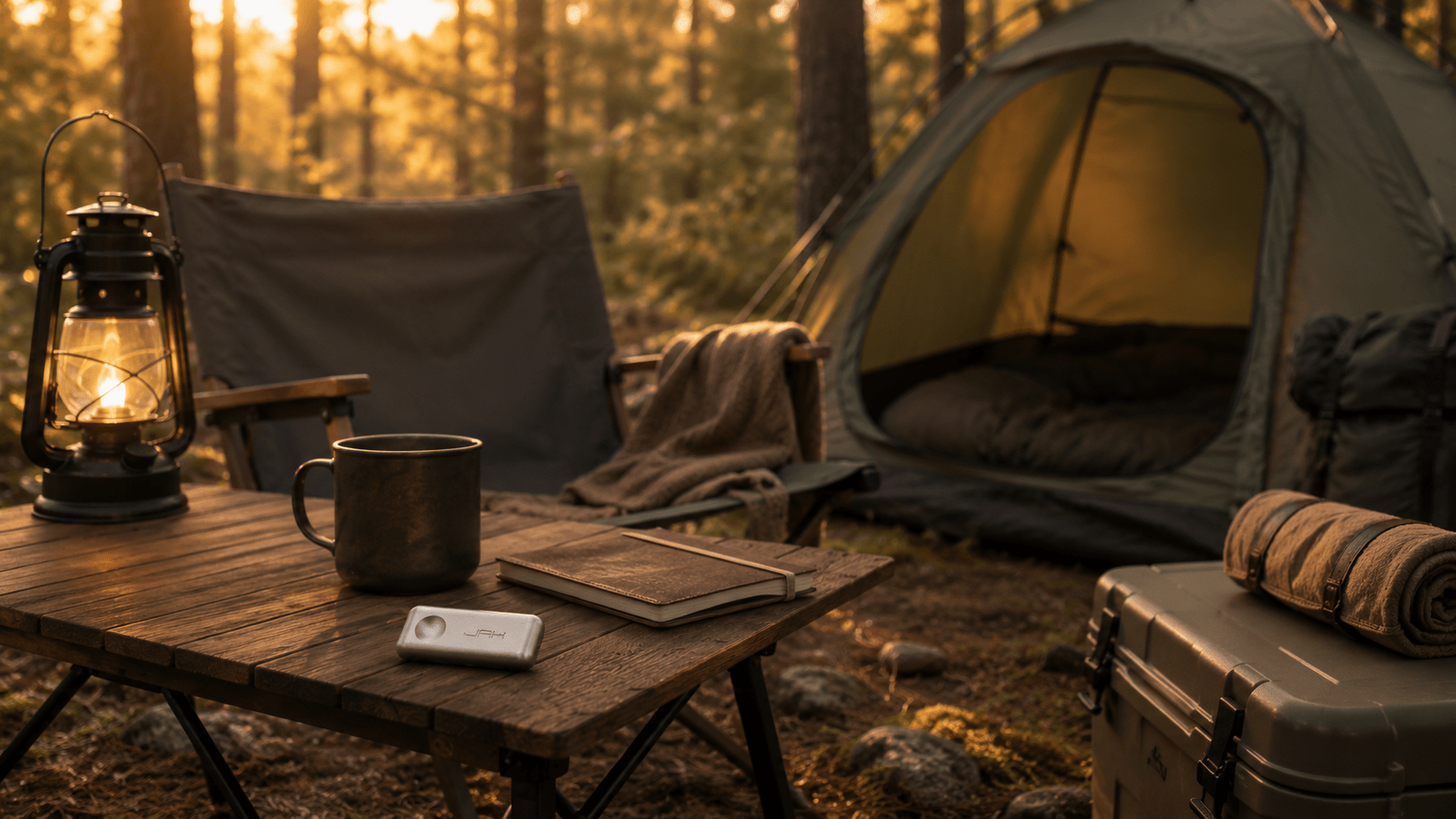
A comfortable campsite does not require a packed SUV, three storage bins, and enough equipment to furnish a small apartment.
The best setups usually feel simple. You can find what you need, move around without stepping over gear, and settle in without spending half the evening assembling accessories.
The goal is not to bring as little as possible. It is to carry equipment that earns its place.
This guide explains how to build a comfortable campsite using compact, durable camping gear, with practical choices for sleeping, cooking, lighting, organization, and relaxing outdoors.
Start With the Three Priorities That Actually Create Comfort
Before writing a packing list, decide what comfort means for the trip.
Most campsite comfort comes from three areas:
- Sleeping well
- Staying protected from weather
- Keeping essential gear organized
An oversized camp kitchen will not matter much if your sleeping pad is uncomfortable or rainwater reaches your clothes.
Build the site from the ground up. Cover your physical needs first, then add the few extras that improve the experience.
Choose Your Campsite Layout Before Unpacking
A common mistake is unloading everything immediately and deciding where it belongs afterward.
That creates clutter from the start.
Instead, divide the campsite into four zones:
- Sleeping zone: tent, sleeping bags and nighttime essentials
- Cooking zone: stove, food, water and utensils
- Relaxing zone: chairs, lighting and personal items
- Storage zone: gear that should remain contained or protected
Keep the cooking area away from the tent and follow local wildlife guidance for food storage. Leave a clear walking path between zones and place frequently used items where you can reach them after dark.
A well-planned campsite should still make sense when the only light available is a headlamp.
Build Sleep Comfort Without Packing Household Bedding
Sleeping gear takes up space quickly, but comfort does not require bringing half your bedroom.
Choose the right sleeping pad
A sleeping pad provides cushioning and helps reduce heat loss through the ground.
For car camping, a thicker self-inflating pad may justify the extra packed size. For hiking or limited storage, a compact inflatable pad with suitable insulation is usually more practical.
Use one adaptable sleep system
Instead of packing several blankets, combine:
- a sleeping bag appropriate for the expected temperature;
- a compact liner when extra warmth is needed;
- one lightweight clothing layer you can wear inside the bag.
A rolled jacket or clothing-filled stuff sack can replace a bulky pillow. Bring a dedicated camp pillow only when it makes a meaningful difference to your sleep.
Let the ground do part of the work
Remove sticks and sharp debris before pitching the tent. Choose level ground rather than trying to compensate for a poor location with extra padding.
A smart tent position costs nothing and improves the entire night.
Pick Compact Furniture That Solves a Real Problem
Camp furniture can improve comfort immediately. It can also consume most of your available storage.
Bring one chair you will actually enjoy using
Choose a chair based on:
- packed size;
- stability on uneven ground;
- weight capacity;
- durability at the joints;
- support during longer periods of sitting.
Ultra-compact chairs save space but may sacrifice back support. Large chairs are comfortable but awkward to carry. Match the chair to the trip rather than choosing only by weight.
Avoid single-purpose surfaces
A storage box with a flat lid can double as a table. A compact roll-top table helps with food preparation, but a large folding table often becomes a place to pile unused equipment.
Every surface should justify the space it occupies.
Keep the Camp Kitchen Small and Useful
A comfortable camp kitchen is organized, not elaborate.
For a basic overnight or weekend setup, most campers only need:
- one stove;
- one fuel source;
- one pot or pan;
- one knife;
- one cutting surface;
- one cup and eating set per person;
- water storage;
- a lighter or ignition backup;
- a small cleanup kit.
Plan meals around the equipment you intend to carry. A simple menu eliminates extra cookware, utensils and ingredients.
Pre-portioning food at home also reduces packaging and makes meals easier to prepare after dark.
Use Lighting in Layers
One extremely bright lantern creates glare, not comfort.
Use separate lighting for separate tasks:
- Headlamp: walking, cooking and setting up equipment
- Low lantern: shared lighting around the seating area
- Small tent light: finding personal items without waking everyone
Warm, lower-output light is often more comfortable after the campsite is established. Keep one light in the same accessible place every night.
Searching through bags for a flashlight is not part of the adventure. It is an organization problem.
Organize Equipment by Function, Not by Size

Combining unrelated objects in one large bag makes a campsite feel chaotic.
A better system is to separate items into a few functional groups:
- sleep kit;
- kitchen kit;
- weather kit;
- hygiene kit;
- personal carry kit.
Frequently used items should stay near the top or in exterior pockets. Backup equipment can remain deeper in storage.
Pouches and labels can help, but do not create an individual organizer for every small object. Too many containers become another kind of clutter.
Choose Durable Gear Where Failure Would Ruin the Trip
Not every item needs to be premium.
Pay closer attention to equipment whose failure would create a real problem:
- tent poles and stakes;
- sleeping pad valves;
- stove connections;
- water containers;
- lights;
- bags and closures;
- tools used near heat.
For low-risk accessories, simple and replaceable may be more sensible than expensive.
Durable camping equipment does not have to be heavy. It simply needs to survive repeated use, dirt, drops and changing conditions.
Create One Compact Personal Kit

Small personal items often spread across the campsite because they do not have a defined home.
Use one pouch for objects such as:
- phone and charging cable;
- sunglasses;
- lip balm;
- insect repellent;
- notebook;
- lighter;
- other legal personal accessories.
Keep the pouch close to the seating area and return each item after use.
The same rule applies here as it does to the rest of the campsite: carry fewer objects, but choose ones that are compact and dependable.
For adults who legally carry smoking accessories, fragile glass may be inconvenient around rocks, vehicles, picnic tables and constantly moving bags. A durable metal option can be more practical for outdoor use.
JAH Pipes is one example of this approach. Its compact, collapsible design and anodized aluminum construction suit campers who prefer one portable item rather than several fragile backups. The brand’s TeslaFlow™ system also uses a longer internal airflow route, allowing the product to remain compact when stored without relying on a permanently bulky form.
For more context on choosing gear for trails and campsites, see the guide to a durable, discreet smoking pipe for hiking and camping.
Always follow local laws, campground policies, smoking restrictions and fire warnings. During dry or windy conditions, the safest choice is not to use any flame.
Prepare for Weather Before It Changes
Comfort disappears quickly when equipment becomes wet or blows across the site.
Check the forecast, then prepare for it to be slightly wrong.
Keep essential items off the ground
Use a waterproof footprint, gear mat or storage bin for:
- dry clothing;
- electronics;
- food;
- paper products;
- ignition tools.
Secure light objects early
Do not wait for wind to strengthen before securing tents, tarps, bags and loose packaging.
Create one dry transition area
A vestibule, tarp edge or covered storage zone gives you somewhere to place wet shoes and outer layers without bringing dirt into the sleeping space.
This small detail makes a campsite far more comfortable in poor weather.
Follow the “One Job or Two” Packing Rule
Before packing an optional item, ask:
- Does it solve a real problem?
- Will I use it more than once?
- Can another item already do the same job?
- Is the comfort improvement worth the space?
The best compact camping gear often performs more than one useful function.
Examples include:
- a storage box that becomes a table;
- a jacket used as a pillow;
- a bandana used as a towel or cleaning cloth;
- a cooking pot that doubles as a serving bowl;
- a lantern that can charge a phone.
Multipurpose gear should not be gimmicky. The second function should genuinely help.
This principle also explains why collapsible personal equipment can make sense outdoors. A product that becomes compact for storage and expands only when used solves two separate problems without requiring two different items.
Protect the Rest of Your Bag From Odor and Residue
Any used personal item can transfer odor to clothing, food packaging or fabric storage.
The simplest system is:
- Let the item cool completely.
- Remove loose residue where permitted and safe.
- Store it in a dedicated inner container or pouch.
- Keep used wipes and similar items separate from clean equipment.
This is especially important on multi-day trips, when a small amount of residue can make an entire bag smell by the second or third day.
The article on keeping a travel setup discreet and organized expands on storage and separation for longer trips.
What to Leave at Home
Overpacking usually happens because people prepare for imagined inconveniences instead of realistic needs.
Common items you may not need include:
- duplicate cookware;
- several knives or tools;
- full-size household pillows;
- excessive clothing changes;
- decorative lighting;
- backups for items unlikely to fail;
- multiple versions of the same personal accessory;
- fragile duplicates packed only because the first item might break.
Pack for the actual trip, not every possible camping scenario.
A Minimalist Camping Checklist
Shelter and sleep
- Tent and footprint
- Stakes and a basic repair item
- Sleeping bag
- Insulated sleeping pad
- Compact pillow or substitute
Cooking and water
- Stove and fuel
- Minimal cookware
- Eating utensils
- Water storage
- Food container
- Small cleanup kit
Comfort and organization
- One chair per person
- Headlamp
- Low lantern
- Functional storage
- Personal-item pouch
- Weather layer
Safety
- First-aid kit
- Navigation or downloaded map
- Sun and insect protection
- Fire-safe supplies where permitted
- Emergency communication plan
The Best Campsite Feels Easy, Not Full
Comfort does not come from surrounding yourself with equipment. It comes from removing small sources of friction.
A dry sleeping area. A supportive place to sit. Enough light to move safely. Equipment that stays organized. Durable essentials that work without constant attention.
That same logic applies to personal gear. Bring one dependable option instead of several objects that create clutter or break anxiety.
Build the site around what you will genuinely use, and the result will feel more comfortable while taking less time to pack, carry and manage.
Bring less—but make every item count.
Share:
Sherlock Pipe Guide: What Makes This Shape So Popular?
How to Build a Better Outdoor Routine With Your Dog