

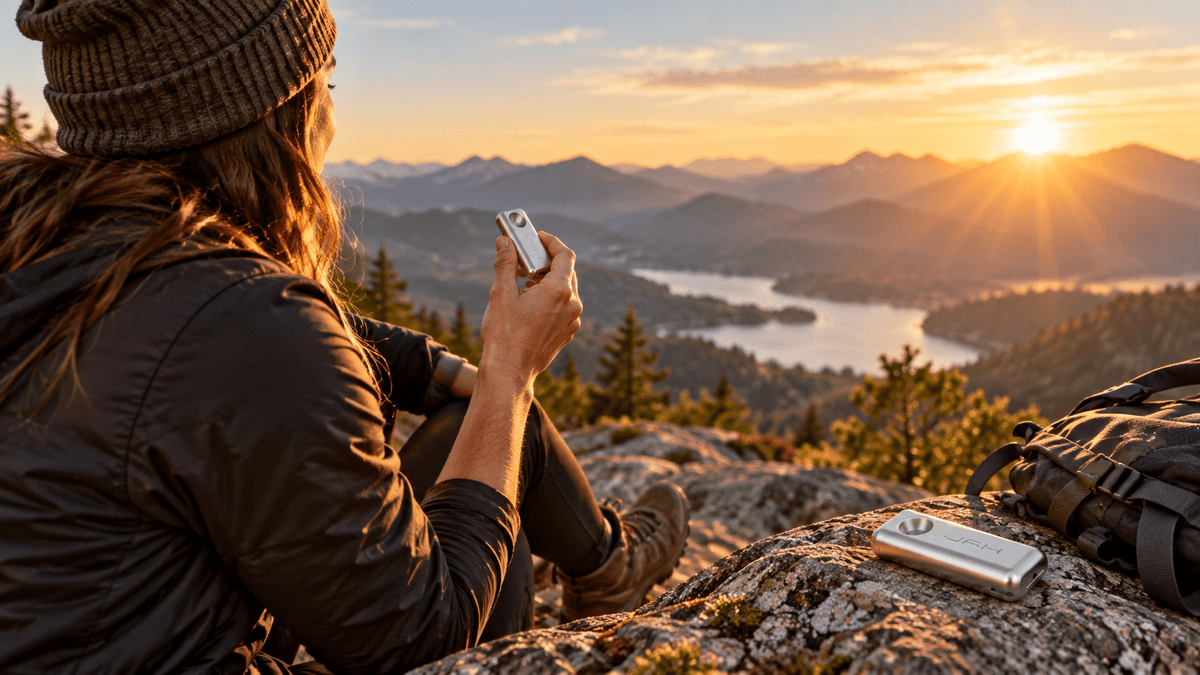
15 Outdoor Adventures Everyone Should Try at Least Once
There is a big difference between spending time outside and having an actual adventure.
An adventure does not necessarily require climbing a mountain, flying across the world, or buying thousands of dollars of equipment.
Sometimes it is simply doing something unfamiliar somewhere you have never been before.
A sunrise hike.
Sleeping outside for the first time.
Kayaking across a quiet lake.
Driving until the city disappears.
The best outdoor adventures tend to stay with you because they interrupt your normal routine.
If your weekends have started feeling a little too predictable, here are 15 experiences worth putting on your adventure bucket list.
1. Take a Sunrise Hike

Hiking gets a completely different personality before sunrise.
The trail is quieter.
Temperatures are often cooler.
And watching the landscape change as the first light arrives makes even a familiar route feel different.
You do not need a difficult summit.
Choose a safe trail with a viewpoint, bring a headlamp, check the weather, and arrive early enough to walk part of the route in darkness.
If you are trying to keep your pack light, our guide to choosing durable and pocket-friendly gear for hiking and camping explores the same principle: bring fewer things, but make sure the things you bring can handle the outdoors.
2. Sleep Under the Stars
Camping changes when the tent stops being the entire point.
On a clear night, spend some time outside your shelter and actually look up.
Choose a location away from heavy light pollution, bring warm layers, and let your eyes adjust to the dark.
You may notice satellites, meteor trails, constellations, or simply far more stars than you normally see from the city.
Even one night can change your sense of how large the sky actually is.
3. Go Kayaking or Canoeing
Being on the water creates a completely different perspective.
A coastline, river, or lake that feels familiar from shore suddenly feels larger once you are moving across it.
For beginners, calm lakes and protected bays are the easiest places to start.
You do not need speed.
Part of the appeal is exactly the opposite: slow movement, fewer distractions, and enough silence to notice what is happening around you.
4. Take a Weekend Road Trip With No Major Itinerary
Not every road trip needs twelve reservations and a spreadsheet.
Pick a general destination.
Save a few interesting stops.
Then leave enough empty space in the schedule to change your mind.
Stop when you see:
- a viewpoint;
- a small town;
- a trail;
- an interesting diner;
- a lake;
- a roadside market.
Some of the best travel memories happen because the plan was loose enough to allow them.
5. Camp Somewhere Without Cell Service
For many people, being somewhere without signal initially feels inconvenient.
Then something changes.
You stop checking.
There is nothing new to refresh.
Suddenly the evening becomes much longer.
Cook something. Walk. Read. Talk. Sit near the fire.
If you are planning your first minimalist camp setup, see How to Build a Comfortable Campsite Without Overpacking.
The goal is not to bring your entire home outdoors.
It is to bring enough to be comfortable and leave the rest behind.
6. Try a Multi-Hour Bike Ride
Cycling lets you cover far more ground than walking while still keeping you connected to the landscape.
Choose a route that mixes scenery with places where you can stop.
Coastal roads, greenways, river paths, and rural routes are especially good.
For your first longer ride, prioritize:
- water;
- sunscreen;
- basic repair tools;
- snacks;
- weather protection.
The point is not racing.
Pick somewhere worth reaching.
7. Spend a Day Fishing Somewhere New

Fishing is unusual because almost nothing may happen for long stretches of time—and that is part of why people love it.
It forces a different pace.
You watch the water.
Notice weather changes.
Talk.
Wait.
Then suddenly everything happens at once.
If fishing is already one of your hobbies, changing locations can make it feel new again. Our guide to choosing a durable smoking pipe for fishing trips looks specifically at gear that has to handle long outdoor sessions, water, and repeated transport.
8. Hike to a Waterfall
There is something unusually satisfying about a trail with an obvious destination.
Waterfall hikes provide that.
The sound often reaches you before the view does, which makes the final approach feel almost cinematic.
Research trail conditions first, especially after heavy rain.
Wet rock is far more slippery than it looks.
And if the waterfall is popular, start early.
Having the place almost to yourself is worth losing a little sleep.
9. Spend an Entire Day at a Lake
A lake day does not need a detailed itinerary.
Bring food, water, shade, something to sit on, and perhaps a kayak, fishing rod, book, or camera.
Then stay.
Swimming, walking the shoreline, cooking outside, watching boats, and doing absolutely nothing for a while can all be part of the same day.
Outdoor gear near water benefits from being compact, simple, and durable. We cover that specifically in What a Smoking Pipe Needs to Handle Wind, Sand, and a Day Outside.
10. Go Stargazing Somewhere Truly Dark
You may think you have seen the stars.
Then you visit a genuinely dark location.
Find somewhere far from large towns, check the moon phase, and avoid bright screens once you arrive.
You do not need a telescope.
A blanket, warm clothes, and enough patience for your eyes to adapt can be enough.
Try identifying:
- the Milky Way;
- major constellations;
- visible planets;
- meteor showers.
It is one of the cheapest adventures on this list and one of the easiest to remember.
11. Take a Photography Walk Somewhere Unfamiliar
You do not need an expensive camera.
Use whatever you already carry.
The challenge is to walk slowly enough to notice:
- reflections;
- architecture;
- textures;
- people;
- shadows;
- signs;
- unusual color combinations.
Photography gives an ordinary walk a purpose.
Instead of simply moving through a place, you start looking at it.
Choose a neighborhood, coastal path, trail, or small town you do not normally visit and spend a few hours exploring without rushing.
12. Try a Night Hike
A trail you know during daylight can feel completely different after dark.
Sounds become louder.
Distances become harder to judge.
Your field of vision shrinks to whatever your headlamp reveals.
For safety, choose an easy and familiar route for your first attempt.
Bring:
- a reliable headlamp;
- backup light;
- warm layer;
- charged phone;
- offline map.
Night hiking is less about covering distance and more about experiencing a familiar environment differently.
13. Spend a Weekend in a Cabin
Cabin weekends sit somewhere between camping and staying home.
You still get trees, trails, cold mornings, outdoor cooking, and distance from the city.
But you also get a bed.
That combination makes cabins ideal for groups where not everyone wants full camping.
Bring less entertainment than you think you need.
Cook.
Walk.
Play cards.
Read.
Sit outside.
A good cabin weekend should feel noticeably slower than normal life.
14. Plan a Microadventure Close to Home
Not every adventure needs a plane ticket.
Pick somewhere within one or two hours of where you live that you have never explored properly.
It could be:
- a coastal town;
- a reservoir;
- a forest;
- a mountain road;
- a state park;
- a scenic viewpoint.
Leave early and return the same night.
Microadventures are useful because they remove one of the biggest excuses people have for not getting outdoors:
“I don't have enough time.”
Sometimes one free Saturday is enough.
15. Build Your Own Outdoor Ritual
Not every outdoor experience needs to involve constant activity.
Find somewhere you actually enjoy being and make returning there part of your routine.
Maybe it is:
- a park bench;
- a fishing spot;
- a trail viewpoint;
- a quiet section of beach;
- a campsite;
- your backyard.
Bring a book.
Coffee.
Music.
A camera.
For adults who already include smoking in their downtime where permitted, a compact piece of gear such as JAH Pipes can simply be part of that personal kit alongside the rest of the things you carry.
The important part is not the object.
It is having somewhere that makes slowing down feel natural.
What Should You Bring on an Outdoor Adventure?
The answer depends on where you are going, but most adventures become easier when you start with the same basics:
- water;
- weather-appropriate clothing;
- sun protection;
- navigation;
- basic first aid;
- food or snacks;
- charged phone or emergency communication;
- appropriate footwear.
Then add only what the activity requires.
A good rule is:
Do not pack for every possible situation. Pack for the situations you are reasonably likely to encounter.
Durable, compact equipment becomes especially useful outdoors because every unnecessary item eventually becomes something you have to carry.
The Best Adventure Is Usually the One You Actually Take
Adventure bucket lists can become another kind of procrastination.
You save places.
Watch videos.
Buy equipment.
Plan the perfect trip.
Then never leave.
Start smaller.
One trail.
One lake.
One night outside.
One unfamiliar road.
Outdoor adventures do not need to be extreme to be memorable.
They just need to interrupt the routine long enough to remind you there is a much bigger world outside it.
Frequently Asked Questions
What are some good outdoor adventures for beginners?
Beginner-friendly options include short hikes, lake days, easy kayaking, car camping, photography walks, stargazing, cycling, and local day trips. Start with activities that require minimal technical experience.
What outdoor activities should everyone try at least once?
Hiking at sunrise, camping, kayaking, stargazing, fishing, cycling, road trips, waterfall hikes, and cabin weekends are accessible outdoor experiences that offer very different ways to enjoy nature.
How do I start an outdoor adventure bucket list?
Start with experiences rather than specific destinations. Write down activities you want to try, such as sleeping under the stars or kayaking, then find realistic places near you where you can do them.
Do outdoor adventures require expensive gear?
Not necessarily. Many activities require only basic equipment you may already own. Rent or borrow specialized gear before buying it if you are trying an activity for the first time.
What should I always bring on an outdoor adventure?
Water, weather protection, appropriate footwear, navigation, sun protection, basic first aid, food, and some form of emergency communication are useful foundations for most outdoor activities.
How can I pack lighter for outdoor activities?
Choose multipurpose equipment, remove duplicate items, carry only what the specific activity requires, and prioritize compact, durable gear that can handle repeated transport.
Are outdoor adventures better alone or with friends?
Both offer different experiences. Solo adventures can provide quiet and independence, while going with friends adds a social element and may offer additional safety for unfamiliar activities.
How can I find outdoor adventures near me?
Look at local parks, trails, lakes, rivers, conservation areas, cycling routes, outdoor clubs, and regional tourism resources. You may have more options within a short drive than you expect.
Share:
10 Best Electronic Music Festivals to Experience
The Ultimate Music Festival Packing List: Everything You Actually Need